What Should I Expect to Pay for Pressure Washing?
 By Big Boy Suds
10 min read
By Big Boy Suds
10 min read
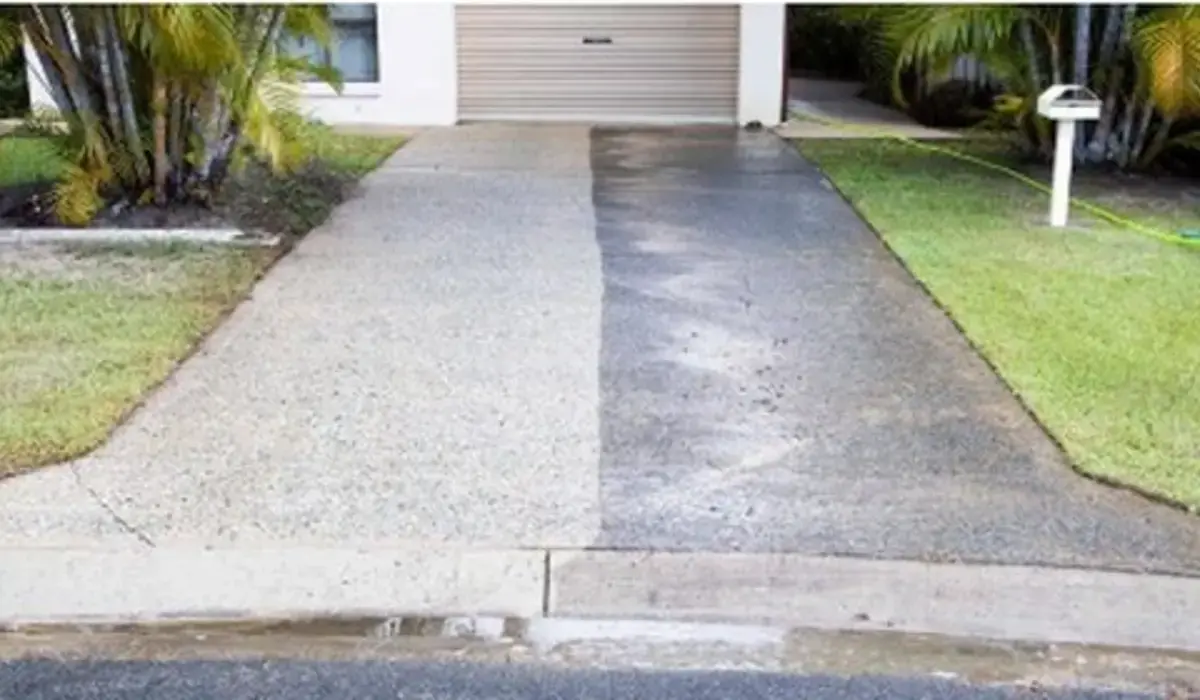
It is the first question almost every property owner asks, and the honest answer is that pressure washing is priced per property rather than off a menu. Two driveways that look identical from the street can quote differently because of size, material, condition, access, and the method the surface actually needs. Below is how professional quotes are built, what pushes a number up or down, and what to send us so your estimate is accurate the first time.
In This Article
How Pressure Washing Companies Actually Price a Job
Nearly every legitimate exterior cleaning quote is built on one of three structures. Knowing which one you are being given makes it far easier to compare two estimates fairly.
Per square foot
Common for large, uniform, ground-level surfaces such as driveways, sidewalks, patios, pool decks, and commercial walkways. The contractor measures the area and applies a rate to it. It is the most transparent structure for flat concrete because the scope is easy to define and easy to verify.
Per hour
Used when the work is unpredictable — heavy organic buildup, awkward multi-level access, detail work around fixtures and landscaping, or a property where the true condition is not visible until cleaning starts. Hourly pricing protects both sides on jobs that cannot be measured cleanly, but you should always ask for an estimated range and what happens if the job runs long.
Flat rate per project
The most common structure for whole-home washes and multi-surface visits. The contractor reviews everything in scope, accounts for setup and labor, and quotes one number. You know the total before work begins, and there is no meter running while the crew works.
The Seven Factors That Move Your Price the Most
When a quote comes back higher or lower than you expected, it is almost always one of these seven variables doing the work.
1. Total area and surface count
Square footage is the baseline, but the number of separate surfaces matters too. A single 900-square-foot driveway is a simpler job than 900 square feet split across a driveway, a walkway, three steps, and an entry landing, because every transition and edge needs its own attention.
2. Surface material
Concrete, pavers, stucco, vinyl siding, painted wood, screen enclosures, and roofing materials all tolerate different amounts of pressure and require different cleaning approaches. Material is what determines the method, and the method drives the labor.
3. Condition and time since the last cleaning
A surface cleaned eighteen months ago needs a maintenance wash. A surface that has not been touched in eight years may need pre-treatment, dwell time, and a second pass. Heavy algae, deep organic staining, rust, oil, and irrigation mineral marks all add time — and some of it may be permanent discoloration rather than removable buildup.
4. Access and setup
Two-story walls, steep or tile roofs, gated backyards, narrow side yards, screened enclosures, and long hose runs from the water source all add setup time before any cleaning happens. On commercial sites, pedestrian traffic and operating hours can add coordination time as well.
5. Water availability and pressure
Exterior cleaning uses a lot of water. A working, accessible spigot with reasonable pressure keeps the job efficient. If water has to be hauled in or supply is limited, that changes the plan and the price.
6. The method the surface requires
High-pressure cleaning and soft washing are not interchangeable. Roofs, painted surfaces, stucco, screens, and older siding generally call for soft washing — a low-pressure application that relies on the cleaning solution and controlled rinsing rather than force. Soft washing usually involves more product and more dwell time, which is reflected in the quote.
7. Add-on services
Paver sealing, gutter face brightening, rust treatment, and post-cleaning protective applications are separate scopes with their own material costs and, in the case of sealing, their own weather and cure requirements. They are quoted alongside cleaning, not folded silently into it.
What Drives Cost on Each Type of Surface
Different surfaces have different cost drivers. This is what we are actually looking at when we walk a property.
| Surface | Primary cost drivers | Typical method |
|---|---|---|
| Driveway | Square footage, traffic staining, oil spots, edge and joint condition, drainage direction | Surface cleaner with high pressure on suitable concrete |
| Sidewalk & walkways | Linear length, number of transitions, shaded sections with organic growth | High pressure on suitable concrete, detail work at edges |
| House exterior | Stories, wall material, trim and soffit detail, landscaping to work around | Soft washing on suitable siding and stucco |
| Roof | Roof material, pitch, access, runoff planning, degree of streaking | Low-pressure soft washing only |
| Patio & pool deck | Furniture to move, screen enclosures, drains, mixed materials in one area | Method matched to each material present |
| Pavers | Joint condition, existing sealer, repairs, whether sealing is included | Cleaning first, sealing quoted separately |
| Commercial exterior | Total area, pedestrian flow, operating hours, water access, entry visibility | Site-specific plan by zone |
Why You Will Not Find a Flat Price List Here
We could publish a single number for a driveway, and it would be wrong for most driveways. Posting a price that does not fit your property helps nobody: you either get a surprise on the day of service or you rule us out over a figure that was never yours to begin with.
The same applies to prices you find in national cost guides. Those averages blend markets with different labor rates, water costs, and climates. South Florida creates its own conditions — year-round humidity, heavy rain, intense sun, irrigation overspray, and fast-returning organic growth — and those conditions change how much work a surface actually needs.
So instead of a price list, we give a free property-specific estimate. You get a real number for your actual surfaces, and it is the number we stand behind.
Bundling Surfaces Lowers the Cost Per Surface
A meaningful share of any exterior cleaning job is setup: travel, staging equipment, connecting water, protecting plants and fixtures, and breaking everything back down. That cost happens once per visit whether we clean one surface or five.
That is why combining work is usually the single most effective way to reduce what you pay per surface. Common pairings that make sense on the same visit:
- Driveway plus the front sidewalk and entry — the whole approach matches instead of one clean strip next to a dirty one
- House wash plus roof soft wash — both are planned around the same access points and runoff paths
- Patio, pool deck, and screen enclosure — connected outdoor space treated as one area
- Paver cleaning plus sealing — cleaning is a prerequisite for sealing anyway
- Commercial storefront, walkway, and entry — the customer-facing zone handled in one pass
It also avoids the uneven look that comes from cleaning one surface now and the adjoining one next year.
What an Unusually Cheap Quote Can Leave Out
A low bid is not automatically a bad one. But when a price is far below everything else you have been quoted, it is worth asking what is different about it. The gap is usually explained by one of these:
- A smaller scope than you think — only the main driveway pad, not the apron, walkway, or entry
- One pressure setting used everywhere, which is how stucco gets etched, paint gets stripped, and paver joints get blown out
- High pressure used on a roof, which can damage roofing material and void manufacturer coverage
- No pre-treatment, so organic growth returns within weeks instead of seasons
- No insurance to cover damage to your property or a neighbor’s
- Add-ons priced separately once the crew is already on site
Questions to Ask Before You Approve Any Quote
These six questions separate a real estimate from a guess, no matter who you hire.
- Exactly which surfaces and boundaries are included in this price?
- What cleaning method will be used on each surface, and why that one?
- Is the quote per square foot, hourly, or a flat project total?
- What would cause the price to change once you are on site?
- What do I need to do to prepare — moving vehicles, furniture, or securing pets?
- Are you insured, and can you confirm that before the appointment?
Any professional should be able to answer all six without hesitating. If the answers are vague, the price probably is too.
How to Get an Accurate Estimate Fast
You can usually get a useful number without waiting for a site visit. The more of this you send up front, the tighter the estimate:
- The property address or at least the city, so travel and water considerations are known
- Which surfaces you want cleaned, and which one matters most to you
- Rough dimensions or a landmark for scale — a two-car versus three-car driveway, one or two stories
- Current photos in daylight, including any stains or areas you are specifically worried about
- Roughly when the surface was last cleaned, if you know
- Access notes — gate codes, locked side yards, pets in the yard, limited parking
- Any deadline, such as a listing date, an event, or a move-out inspection
Photos do a lot of work here. Buildup level is the hardest factor to judge from a description, and it is one of the biggest variables in the final price.
How Big Boy Suds Quotes Your Property
We review the details you send, ask about anything that would change the scope, and confirm which method each surface needs before we give you a number. If something in the quote depends on what we find on site — an existing sealer on pavers, a roof that needs a closer look — we say so up front rather than adjusting the invoice later.
Estimates are free, they cover Broward County including Davie, Plantation, Weston, and Pembroke Pines, and requesting one does not commit you to anything. If you want to talk it through instead of filling out a form, calling is often faster.
Pressure Washing Cost Questions
Is pressure washing priced by square foot or by the hour?
Both are used. Large uniform surfaces like driveways and walkways are commonly priced per square foot, while unpredictable detail work is sometimes quoted hourly. Whole-home and multi-surface visits are usually a flat project price so you know the total before work starts.
Does a two-story home cost more to wash than a single-story home?
Generally yes. Additional height means more setup, more equipment positioning, and more time per section, even when the total wall area is similar. Access around landscaping and hardscape also affects the plan.
Is soft washing more expensive than pressure washing?
Soft washing typically involves more cleaning product and more dwell time, which can make it cost more per square foot than high-pressure cleaning. It is also the correct method for roofs, stucco, painted surfaces, and screens, where high pressure risks damage.
Will my price be higher if the surface has not been cleaned in years?
It can be. Heavy buildup may require pre-treatment, longer dwell time, or a second pass. During the review we will also tell you if some marks look like permanent discoloration rather than removable buildup, so expectations are set before work begins.
Are estimates free?
Yes. Big Boy Suds provides free quotes by phone or through the website form, and requesting one does not create any obligation.
Does combining services actually lower the cost?
It lowers the cost per surface, because travel, staging, water setup, and protection happen once for the whole visit instead of once per trip. It also keeps adjoining surfaces looking consistent.
Can you give me a price from photos instead of a site visit?
Often yes. Clear daylight photos plus the address, surface types, and approximate size are usually enough for a useful estimate. Some projects — roofs and previously sealed pavers in particular — may still need a closer look before the scope is final.
Do I have to pay for the water used?
Exterior cleaning normally runs off the property’s water supply, so the water itself appears on your utility bill rather than the invoice. If a property has no usable water access, that changes the plan and is discussed during the quote.
Related Articles & Services
Ready for a Real Number on Your Property?
Big Boy Suds provides free, property-specific pressure washing estimates across Broward County — Davie, Plantation, Weston, Pembroke Pines, and beyond.